What Were the AI Tools Doing?
On 29 October, about $6.3 billion in crypto left Binance in under four hours. The FBI says North Korea did it. Most of the news stopped at who. Almost nobody asked what the AI tools were doing.
- 0:00$6.3 billion, gone
- 0:48Follow the money
- 4:18Find the doors
- 6:58Lock your own
- 10:23Look ahead
 AI
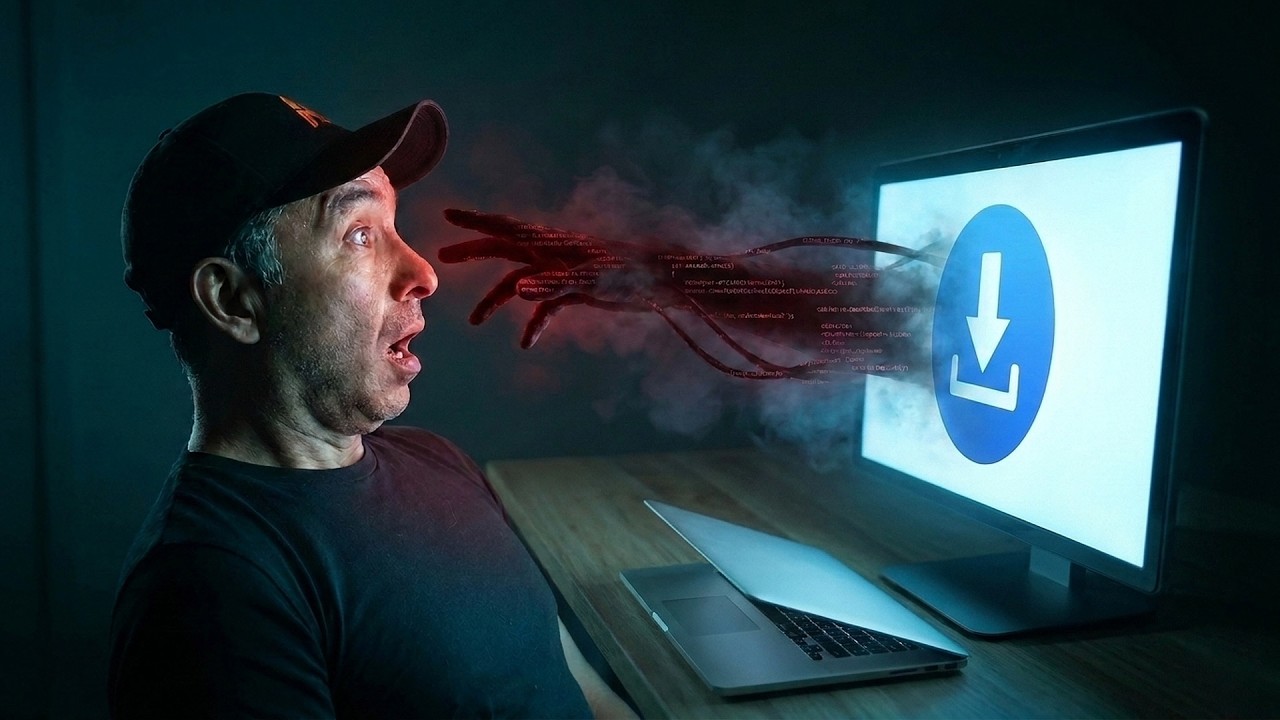
Most of the news stopped at who. Almost nobody asked what the AI tools were doing, at the start and in the middle.
| Source | What it is | Date | Link |
|---|---|---|---|
| Binance | Incident report on the theft | 3 Nov 2026 | Open → |
| TRM Labs | Analysis of the transfers and their timing | 29 Oct 2026 | Open → |
| Elliptic | Report on the size of the theft | 30 Oct 2026 | Open → |
| FBI | Alert naming North Korea | 31 Oct 2026 | Open → |
| Five Eyes agencies | Careful Adoption of Agentic AI Services | 1 May 2026 | Open → |
None so far. If we get something wrong, the fix is listed here with its date.
TranscriptRead the full transcript
From the approved script.
$6.3 billion. Gone. Most of it in about 20 minutes. It's almost certainly the biggest single theft in history. Six times what Saddam Hussein took from Iraq's central bank.
And it started with one engineer, searching online for an AI tool. Then came a fake job test. A key card that wasn't theirs. Ten blockchains. Under four hours. The FBI says North Korea did it.
Most of the news stopped at who. Almost nobody asked what the AI tools were doing, at the start and in the middle. So why is nobody asking that?
In this video, we follow the money, find the doors, and lock your own. Five simple steps. And stay to the end, for the rule five governments wrote that nobody has to follow.
Part one. Follow the money.
Binance is a crypto exchange. It works a bit like a bank for digital money, but it isn't one.
Binance put out its own report on 3 November, and it reads like a spy story. It starts in June with that engineer, who the report calls Engineer A. To get the AI tool, he first downloaded a helper program that installs apps, and ran it. Someone had changed it.
Binance caught it. They gave him a new laptop and changed his passwords and keys, which is exactly the right thing to do. The attackers had already learned something a new laptop can't fix, though. They knew what his job was, and who he worked with on Binance's wallet team.
In September, the attackers went after a second engineer, Engineer B. He got a message on a real job website. Someone claimed to be a project director, and Engineer B's profile said he had worked at Binance. First came a video interview with a fake HR person, who even shared a social media account full of personal photos to build trust. Next came a chat with the boss of a company that didn't exist.
Last came a coding test. Engineer B opened it on his work computer, and it ran. Hidden inside was a brand new kind of malware, which is a program built to spy and steal. Binance's security tools didn't spot it.
On the twentieth of October, the attackers used that computer and something Binance calls an internal AI tool. With it, they took control of two more engineers. One was new, Engineer C. The other was Engineer A, the same man who got the new laptop back in June.
On his computer sat something called a token. Think of it as a key card that lets someone put new software inside Binance. Nine days later, the attackers logged in to Engineer C's computer and used Engineer A's key card. Then they ran a program that reached the system that signs off when money leaves Binance's online wallets.
That same day, the money started moving, across 10 different blockchains, which are the networks crypto runs on. Binance switched off withdrawals, and the money kept moving anyway. The attackers had already given their own program permission to move funds out of one of Binance's wallets. Because of the way that wallet was built, there was no single key Binance could pull to stop it. The last transfer went through just under four hours later.
Two days later, the FBI named the thief. It said North Korea did it, through a hacking group it calls Trader Traitor. Kim Yo-jong, the sister of North Korea's leader, denied it and called the FBI's finding a grave political provocation. A South Korean official said it was her first statement ever about a hacking claim.
That's where most of the news stopped. It's also where the question I couldn't let go of begins.
Part two. Find the doors.
Look at where AI sits in this story. It started with an engineer who wanted an AI tool. The way across was the company's own AI tool. Binance hasn't said which tools they were, or what its own AI tool was allowed to reach. It only says it rebuilt the tool and its access rules.
To be fair, nothing in the report says an AI planned the theft. People did that. The AI tools were the doors, and the doors are the real story.
These doors keep turning up. Earlier this year, a company called Push Security found fake install pages for AI coding tools, mostly for one called Claude Code. The crooks bought Google ads so their fake page would show up first. In August 2025, a poisoned piece of code went looking on programmers' computers for their AI tools, then told those tools to hunt for secret keys and crypto wallets. That same month, thieves stole the keys of a company's AI chat helper and used them to pull data out of its customers' systems.
Here's a quick guess for you. Anthropic, the company behind Claude, keeps a public count of the security holes its AI has found in free, shared software. On 2 November, it had reported 5,087 of them. How many do you think have been fixed so far?
629.
The IMF, which watches over the world's money system, warned about this in May. Attackers can now find a weak spot and use it faster than people can fix it.
Then there's the question of where the money goes. A firm called TRM Labs estimates that North Korea has stolen about $12.8 billion in crypto since 2017. $7.4 billion of that was this year alone. The US government and an 11-country sanctions team both say the money pays for weapons. In 2023, a top White House official said hacking pays for about half of North Korea's missile program. She didn't explain how she got that number, so hold it lightly.
If you want the stories behind the AI headlines, researched properly, subscribe. Now stay, because the next part is about your own money, and a gap that most people never check.
Part three. Lock your own.
One quick note first. This is general information, not financial advice, and your situation is your own.
Remember, Binance works a bit like a bank, but it isn't one. If a real bank fails, the government steps in. In Australia, you're covered up to $250,000 per person, per bank. In the US, it's $250,000 per person, per bank, for each way an account is owned. In New Zealand, it's $100,000 per person, per bank or deposit taker.
Crypto sitting on an exchange is covered by none of them. So when an exchange gets hacked, getting your money back depends on the exchange. Binance says it's paying for this loss itself. People who used an exchange called Mount Gox lost their coins back in 2014, and some of them are still waiting to be paid.
Here's the part that surprised me. Even at a real bank, those guarantees don't cover scams or hacks. They only pay out if the bank itself fails, so if someone tricks their way into your account, the guarantee won't help you.
So most of the protection has to come from you. The good news is that the steps are simple, and every one of them comes from government agencies in Australia, the US or New Zealand.
Step one. Use a passkey, or a small physical security key, to log in to your email, your bank and any exchange. A fake website can't trick those out of you. Codes sent by text message or email are the weakest kind.
Try this right now, if you can. Pause the video, open your email's security settings, and look for the word passkey. I'll wait.
Step two. Only download apps from the official website, by typing the address yourself, or from the official app store. Skip anything marked sponsored. America's consumer watchdog, the Federal Trade Commission, warned about fake ads for AI tools back in 2023. Binance hasn't said if its engineer clicked an ad. But its trouble started the same way, with a download he found through a search.
Step three. Treat a surprise job offer as a possible attack. Never open a coding test on a computer that holds your money or your passwords. The FBI says to use a separate device.
Step four. Agree on a family code word. A voice on the phone can now be copied by AI. So if someone you love calls asking for money, hang up and call them back on the number you already have.
Step five. Never read a one-time code out loud to anyone, whoever they say they are. And after a hack like this one, expect fake offers to pay you back. Go to the company's website or app yourself, never through a link someone sends you.
Those five steps protect you today. The bigger question is what happens next.
Part four. Look ahead.
The numbers point one way. According to Chainalysis, a firm that tracks crypto crime, the average North Korean crypto hack took about $50 million in 2021. This year, it's about $185 million. The heists are getting much bigger.
The people who watch the world's money are worried too. In August, the head of the Financial Stability Board wrote to the finance ministers of the G20, a group of the world's biggest economies. He said the most urgent worry is what the newest AI could do to cyber risk. In May, the IMF said that sooner or later, defences will be broken. And in June, Anthropic said it expects many other AI companies to have flaw-finding AI like its own within 6 to 12 months. Some may put it out without safety limits.
Now, that rule I promised you. In May, six government security agencies from five countries, Australia's included, wrote a guide for big organisations that let AI agents into their systems. Three of its rules are simple. Give the AI as little access as possible. Give it keys that run out quickly. And make a human say yes before anything big happens, like moving money.
Read that guide next to Binance's report, and the questions write themselves. Here's the catch, though. Nobody has to follow it. The new crypto laws coming in, including Australia's from April 2027, are about licences, not about AI.
I build software with AI coding tools every day, so this one hit close to home. The app I run my drone business on follows one rule. It won't run unknown code while it installs, it only installs exact versions I've already checked, and it gets a safety check before anything goes live. I didn't do that because I expected North Korea. I did it because the easiest door to lock is the one you open yourself.
And since this whole story is about trust, here's a quick note. This is my AI clone talking. I used AI tools to help with the research and the script, and I approved every line.
So, in one breath. A search for an AI tool, a fake job test, a company AI tool turned against its own team, and $6.3 billion taken in under four hours.
If you only take away one thing, take this. The biggest danger isn't a smarter AI. It's an AI, or a person, with more access than anyone is watching. That's my view, not a proven fact. Follow the money, then lock your door.
Here's your challenge. Today, set up a passkey on your email. When it's done, write "done" in the comments, so I know this helped.
If you want the stories behind the AI headlines, researched properly, subscribe. In the next video, there's another investigation. Thanks for watching and I'll see you on the next one.